
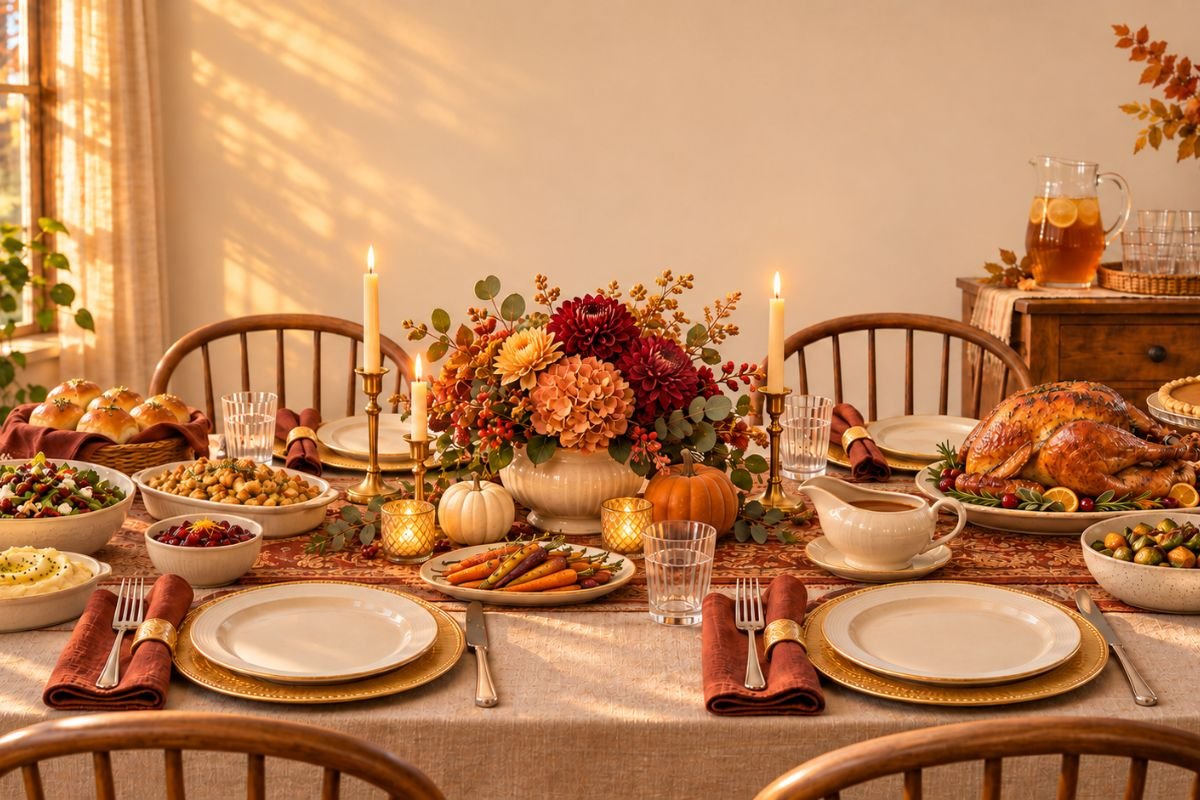
Thanksgiving Hosting Checklist: What to Do and When
Hosting Thanksgiving comes with plenty of little details: a chair for everyone, enough serving spoons, somewhere to put the drinks, and a plan for all those leftovers. Getting those details out of your head and onto a checklist makes the whole day easier to organize.
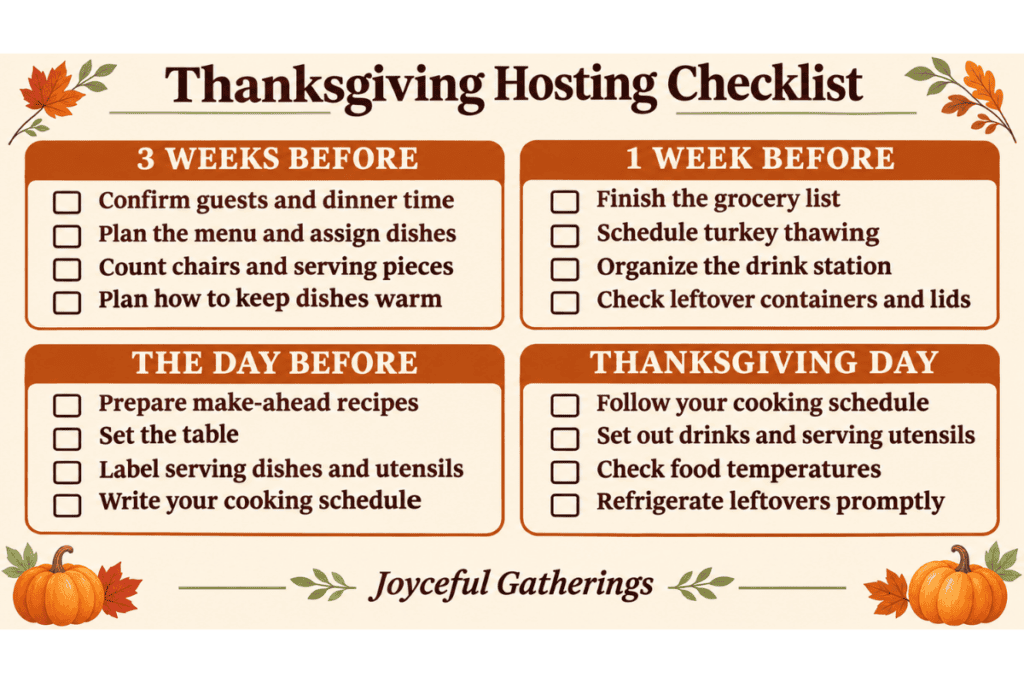
This Thanksgiving hosting checklist breaks the preparations into four manageable stages: three weeks before, one week before, the day before, and Thanksgiving Day. You’ll also find practical hosting essentials beside the tasks they help with, so you can check your cabinets before adding anything to your shopping cart.
Affiliate Disclosure: This post may contain affiliate links. As an Amazon Associate, I earn from qualifying purchases at no additional cost to you.
Quick Summary & Key Takeaways
- Three weeks out: Confirm your guests, plan the menu, and count chairs and serving pieces.
- One week out: Organize groceries, turkey thawing, drinks, and leftover containers.
- The day before and day of: Prepare what you can, follow a cooking schedule, and make time to store leftovers safely.
You don’t need a matching collection of holiday serveware. Start with what you own, borrow occasional-use items, and fill only the gaps that would make serving dinner difficult.
Thanksgiving Hosting Countdown at a Glance
| When | Main tasks | Essentials to check |
|---|---|---|
| Three weeks before | Guest list, menu, seating, serving plan | Serving dishes, folding chairs, slow cooker |
| One week before | Groceries, thawing plan, drink station, leftovers | Beverage dispenser, food storage containers |
| The day before | Make-ahead prep, table, serving labels | Gravy boat, serving utensils, trivets |
| Thanksgiving Day | Cook, serve, refill, refrigerate leftovers | Food thermometer, warm-holding equipment, containers |
Starting late? Use the same order: settle the guest list and menu first, check your equipment, and then work through the remaining preparations.
Three Weeks Before Thanksgiving: Make the Big Decisions
Confirm your guest list and dinner time
- Invite guests and share the planned meal time.
- Ask about food allergies and dietary needs.
- Find out who would like to bring a dish.
- Write down each guest’s contribution and whether it needs oven or refrigerator space.
A shared menu prevents three people from bringing rolls while everyone assumes someone else has the vegetables covered. Give guests a specific suggestion if they ask what to bring: a pie, a cold appetizer, or drinks can be easier to accommodate than another casserole needing the oven.
Plan a menu your kitchen can handle
- Choose the main dish, sides, bread, dessert, and drinks.
- Check which recipes can be prepared ahead.
- Note oven temperatures and cooking times beside each dish.
- Decide what you’ll make, buy prepared, or ask someone to bring.
Before adding another side, look at your oven schedule. A smaller menu with a clear plan is easier to serve than several dishes competing for the same shelf.
Count seats and serving dishes
- Count sturdy chairs and usable places at the table.
- Leave clear paths between the kitchen, dining area, and bathroom.
- Match each menu item to a serving bowl, platter, or baking dish.
- Check that each dish has an appropriate serving utensil.
For seating gaps: Folding Dining Chairs – Check the manufacturer’s weight rating, seat height, and storage dimensions. Set each chair up fully and test it on your dining-room floor before the holiday. Ask guests about seating needs rather than assuming every chair will be comfortable for everyone.
For serving gaps: Serving Bowls and Platters. Choose sizes that fit your menu and table. If you plan to move a dish from oven to table, verify that the specific piece is oven-safe and follow its care instructions.
Decide how you’ll keep a side dish warm
- Choose which dish, if any, will use a slow cooker.
- Check the appliance instructions and available counter space.
- Plan a location near an outlet, with the cord clear of walkways.
A slow cooker or food warmer, such as a chafing dish or buffet server, can help keep prepared side dishes warm while you finish dinner. Choose a size that fits the amount you’ll serve and the space available on your buffet or counter.
I’ve used chafing dishes when hosting, and my guests were in awe when they saw our spread! They made the buffet look special and helped keep the food warm while everyone served themselves. It was such a lovely way to present the meal.
One Week Before Thanksgiving: Shop and Organize
Finish your grocery list and thawing plan
- Review every recipe, including butter, broth, seasonings, and garnishes.
- Buy shelf-stable ingredients and schedule your fresh-food shopping.
- Clear refrigerator space for ingredients and finished dishes.
- Put your turkey’s thawing start time on the calendar.
For refrigerator thawing, USDA advises allowing approximately 24 hours for every 4 to 5 pounds of whole turkey. Once thawed, it can remain refrigerated for one to two additional days before cooking. Work backward from your cooking day using your turkey’s actual weight. Keep it in a container to catch any drips.
See USDA’s turkey thawing guidance for details.
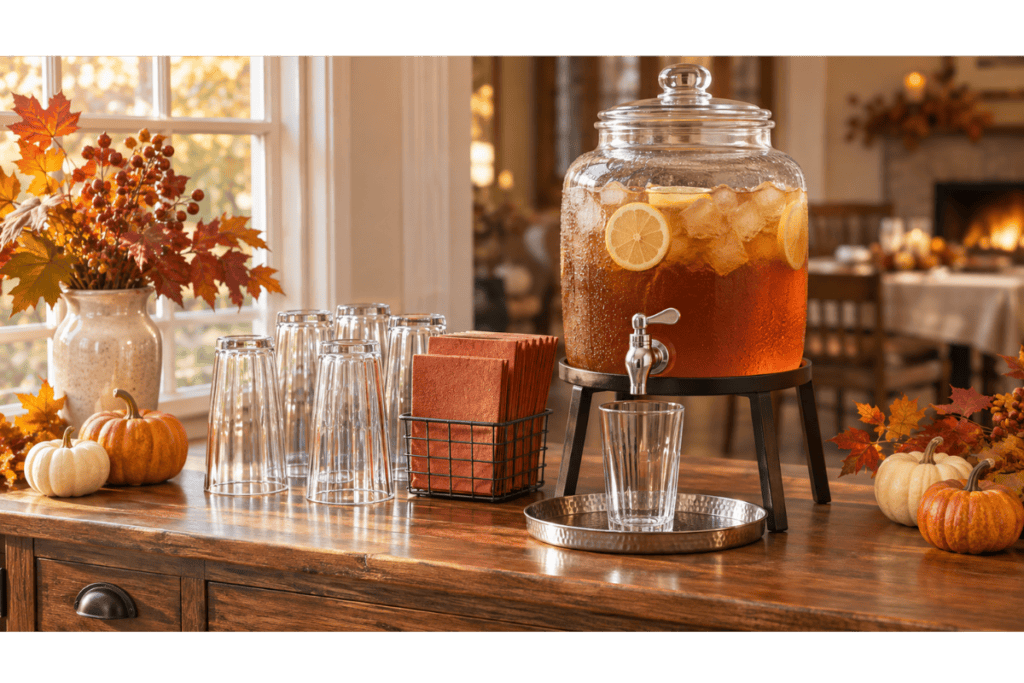
Set up a simple drink station
- Choose drinks and add ice to your shopping list.
- Put cups, napkins, and a small wastebasket near the drink area.
- Locate the station where guests can refill without crowding the stove.
- Check that your drink container fits the available space.
A beverage dispenser for cold drinks can make water, iced tea, or another cold drink easy to serve. Look for an accessible spigot, a lid, and a shape you can clean comfortably. Verify whether the model is suitable for your intended drink and temperature; don’t assume a cold-drink dispenser can hold hot cider.
A pitcher works well for a smaller gathering. Use a tray beneath either option to catch drips.
Get ready for leftovers
- Match food storage containers with their lids.
- Set aside shallow containers for dividing larger dishes.
- Find labels or tape and a marker.
- Ask guests to bring a container if they’d like food to take home.
Shallow food storage containers with lids are useful when you need to divide leftover turkey and sides into smaller portions. Check freezer, microwave, and dishwasher suitability for the specific containers and lids before buying.
You don’t need a new container for every guest. Reuse suitable containers you already have and buy extras only if your supply falls short.
The Day Before Thanksgiving: Prepare the Serving Space
Finish the tasks that won’t need your attention tomorrow
- Prepare recipes that specifically allow advance preparation.
- Wash produce and measure ingredients where appropriate.
- Chill drinks and organize the refrigerator.
- Empty trash bins and check the guest bathroom.
- Write a cooking schedule working backward from dinner time.
Include preparation, cooking, resting, reheating, and serving in the schedule. Give yourself a little breathing room between tasks, especially if one person is handling most of the cooking.
Set the table and label serving pieces
- Set out plates, glasses, napkins, and flatware.
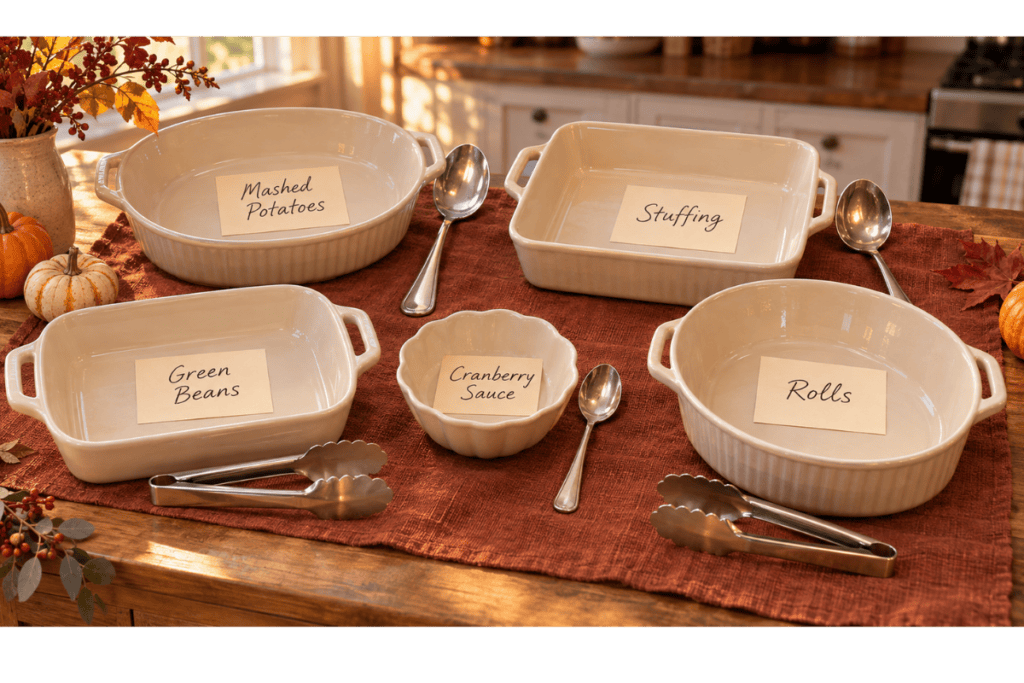
- Place a note in each empty serving dish naming its food.
- Put the matching spoon, fork, or ladle beside each dish.
- Set out trivets and clear a landing spot for hot cookware.
This is the moment to find the gravy container. A gravy boat with saucer gives guests a dedicated way to pour gravy, while the saucer helps catch drips. Check capacity and handling; a small pitcher you already own may also do the job.
A gravy boat is a serving vessel, not a reliable way to keep gravy hot throughout dinner. Bring out a manageable amount and replenish as needed from gravy held safely hot.
Keep the centerpiece easy to move
- Leave space for food and passing dishes.
- Keep decorations low enough for conversation.
- Choose a landing spot for the centerpiece if it needs to move.
A few small pumpkins or flameless candles on a low tray can make the table feel festive without filling every inch. For more seasonal decorating inspiration, explore these cozy fall home decor ideas.
Thanksgiving Day: Follow Your Plan and Welcome Your Guests
Before guests arrive
- Review your cooking schedule and start the longest tasks first.
- Empty the dishwasher and clear the sink.
- Set up drinks, cups, and ice.
- Check that chairs are secure and paths are clear.
- Ask a helper to handle drinks, coats, or serving dishes.
Give helpers a specific job. “Could you fill the water glasses?” is easier to act on than “Help wherever you can.”
As dinner comes together
- Use a food thermometer to check temperatures.
- Move hot dishes onto trivets or appropriate warm-holding equipment.
- Put serving utensils with every dish.
- Bring out gravy shortly before serving.
- Move the centerpiece if you need more room.
For warm holding, USDA advises keeping cooked food at 140°F or above. Use a thermometer to check the food itself; the name of an appliance setting doesn’t confirm its temperature. See USDA’s hot-food holding guidance.
If you prepared a dish ahead and chilled it, reheat leftovers to 165°F using the stove, oven, or microwave before transferring to a preheated slow cooker. Bring reheated sauces, soups, and gravies to a boil. USDA advises against reheating cold leftovers in a slow cooker because they may warm too slowly. See USDA’s safe reheating methods.
After dinner
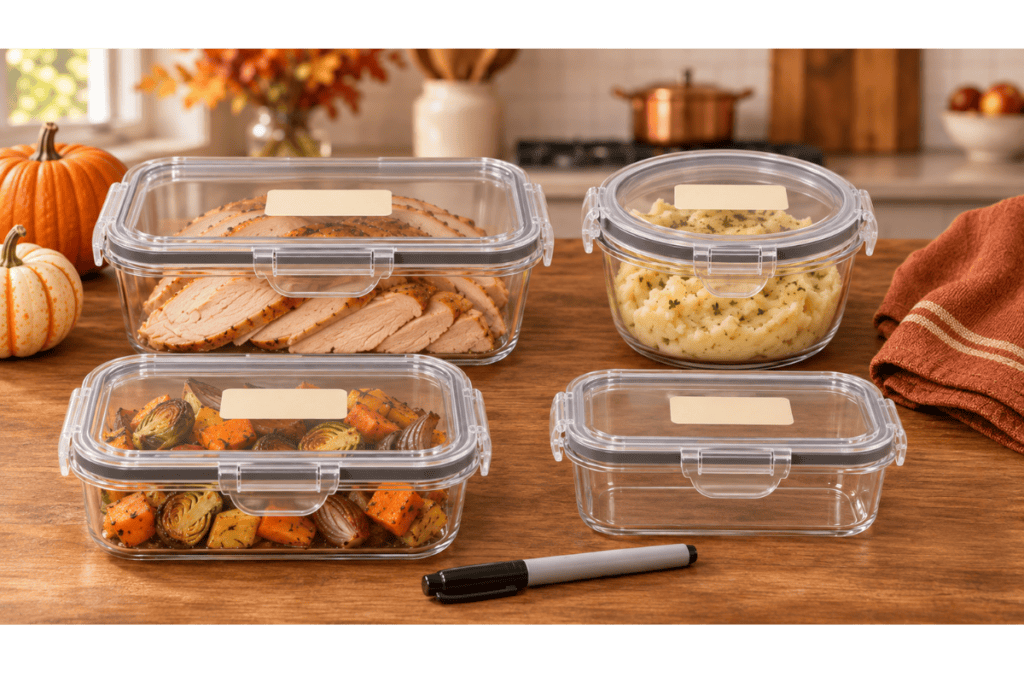
- Divide perishable leftovers into shallow containers promptly.
- Label containers with the food and date.
- Refrigerate leftovers within two hours, or one hour when temperatures exceed 90°F.
- Keep refrigerated leftovers at 40°F or below and use within three to four days, or freeze for longer storage.
- Pack take-home food with time for guests to transport and refrigerate it safely.
Set a reminder if conversation tends to stretch into the afternoon. You can put the food away and return to coffee and dessert. Find the full recommendations in USDA’s leftover safety guidance.
Thanksgiving Hosting Essentials: What Should You Actually Buy?
Use the checklist to identify a missing function before choosing a product.
| Essential | What it helps with | Use or borrow first |
|---|---|---|
| Serving dishes | Holding sides and carved meat | Suitable baking dishes and everyday platters |
| Gravy boat | Pouring gravy at the table | A suitable small pitcher |
| Beverage dispenser | Guest drink refills | Pitchers |
| Slow cooker | Holding a suitable cooked dish hot | Existing equipment that maintains a safe temperature |
| Shallow food containers | Dividing and storing leftovers | Existing food-safe containers with matching lids |
| Folding chairs | Filling a seating shortage | Borrowed sturdy dining chairs |
Check your cupboards against the menu, then shop only for the gaps. Neutral serving pieces and practical storage can be useful for Christmas dinner, birthdays, and everyday gatherings, too.
Thanksgiving Hosting FAQ
How early should I start preparing for Thanksgiving?
Three weeks gives you time to confirm guests, assign dishes, and check equipment. If you have less time, begin with those decisions and simplify the menu where needed.
What can I do the day before Thanksgiving?
Set the table, label serving dishes, organize drinks, clear refrigerator space, and prepare recipes that include make-ahead instructions. Leave your cooking schedule somewhere easy to see.
Do I need matching serving dishes?
No. Everyday bowls, platters, and suitable baking dishes can work together. Repeating a napkin color or using a simple table runner can help the table feel coordinated.
How can I host Thanksgiving in a small space?
Serve food from a counter or sideboard, keep decorations compact, and put drinks away from the cooking area. Check your seating arrangement before the day so guests can move comfortably.
What are easy-to-forget Thanksgiving supplies?
Check serving spoons, trivets, ice, a food thermometer, leftover-container lids, trash bags, and chairs. These small details are worth checking while there’s still time to borrow or buy what’s missing.
Save this Thanksgiving hosting checklist, choose your first few tasks, and let the preparations happen a little at a time. A welcoming table can be simple—and you deserve a chance to sit down and enjoy it, too.